

News archive
Search
Selected range: all news
As climate change alters living conditions, animals are migrating toward new habitats. How are their relationships with humans being reshaped? The new research project INVANISH, funded by an ERC Consolidator Grant, sets out to answer this question. It will be led by Italian anthropologist Deborah Nadal at the Institute of Ethnology of the Czech Academy of Sciences.
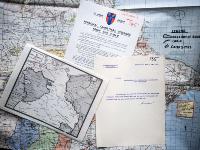
Even eighty years after the end of World War II, stories locked away in the recesses of memory are still coming to light – like the overlooked past of the many thousands of Czechoslovaks who served in the German army. “We tend to see World War II in fixed images that we consider unquestionable and reflective of reality. But it turns out it’s not that simple,” historian Zdenko Maršálek stresses. The phenomenon of non-German soldiers serving in the Wehrmacht reveals just how much our perception of the past can be shaped artificially. The article came out in the A / Magazine of the Czech Academy of Sciences.

Moving to a foreign country can be stressful. That is why, for two decades now, EURAXESS Czech Republic has been guiding researchers and their families through it all, from visa formalities to settling into a new environment. To date, it has supported more than 10,000 researchers. Below, Markéta Padevětová and Zuzana Maršálková from the Centre of Administration and Operations of the Czech Academy of Sciences explain how the activities of the Czech branch of this European network are evolving.

The Egyptians, Greeks, and Romans alike used fragrant balms, oils, and perfumes in rituals, medicine, and cosmetics. Now, more than 2,000 years later, researchers in Prague are working on “reviving” these ancient scents. The article came out in the 2025 English issue of A / Magazine.
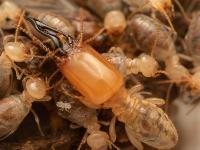
Not all bugs live fleeting lives. Royal termite pairs can survive for several decades, setting records for longevity in evolutionary terms as well – their advanced colonies have been around since the dinosaur era. The longevity of termite kings and queens is one of the topics studied by Robert Hanus’s research team at the Institute of Organic Chemistry and Biochemistry of the Czech Academy of Sciences. They’ve been maintaining laboratory termite colonies in the basement of their headquarters in Prague–Dejvice for several decades. What have they managed to find out about termites’ “elixir of youth”? How are bees, ants, and termites similar to each other, and what differentiates these representatives of social insects? The article is featured in the 2025 English issue of A / Magazine.

The first successful project bears the names of Leoš Valášek from the Institute of Microbiology of the Czech Academy of Sciences (CAS) and Julius Lukeš from the Biology Centre of the CAS. Together with international colleagues, they will pursue research that could lead to a better understanding of genetically determined rare diseases. The second project, led by Jan Zouplna from the Oriental Institute of the CAS, will focus on studying the political systems of countries in the MENA region.

Nine outstanding scientists from the Czech Academy of Sciences have been awarded for their contributions across diverse fields of study, with three of them receiving the Academic Award – Praemium Academiae and six the Lumina Quaeruntur Award from CAS President Radomír Pánek at a ceremony held on 29 October 2025. The awards come with financial support for their ongoing research.
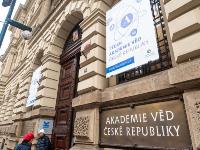
Tours of labs, science talks, interactive exhibitions, workshops, film screenings – and above all, the chance to chat face to face with researchers. All this and more awaits visitors at the Week of the Czech Academy of Sciences festival, which will open its doors on 3 November 2025 at nearly thirty venues across the country. Until 9 November, festivalgoers of all ages will be able to peek into the world of cutting-edge discoveries. Plan your visit in advance. Admission to all events is free, though some require a reservation.
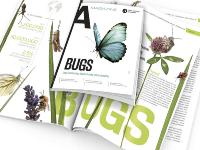
Insects hold the title of the most diverse group of animals on Earth. At the same time, they rank among the most endangered. One third of insect species are estimated to be at risk of extinction. Nearly half are experiencing significant population decline. Despite this fact, research on insects is ever-advancing: thanks to genome analysis, scientists are now gaining deeper insight into the evolutionary success of termites, ants, and bees, along with their communication abilities and collective intelligence. Find out more in the second-ever English issue of A / Magazine – the official quarterly magazine published by the Czech Academy of Sciences.
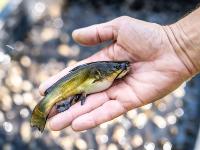
One of Medek’s fishponds near the Czech town of Kroměříž is a place where the invasive black bullhead catfish reigns beneath the surface. It is a serious threat to native fish and its presence needs to be carefully monitored and controlled. And that’s what researchers from the Institute of Vertebrate Biology of the Czech Academy of Sciences and other institutions are working on. Click on the photos for the photo story, which was first published in the 3/2025 Czech issue of A / Magazine.
The Czech Academy of Sciences (the CAS)
The mission of the CAS
The primary mission of the CAS is to conduct research in a broad spectrum of natural, technical and social sciences as well as humanities. This research aims to advance progress of scientific knowledge at the international level, considering, however, the specific needs of the Czech society and the national culture.
President of the CAS
Prof. Eva Zažímalová has started her second term of office in May 2021. She is a respected scientist, and a Professor of Plant Anatomy and Physiology.
She is also a part of GCSA of the EU.